
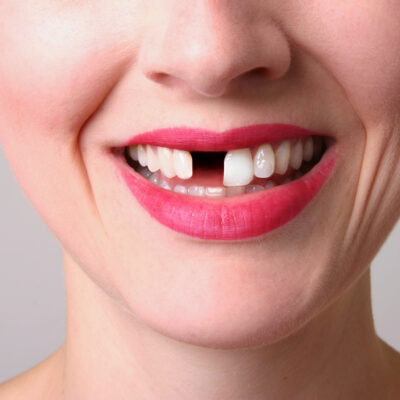
For generations, dentures were the default answer to significant tooth loss. They were accessible, relatively affordable, and widely available. But for the growing number of El Segundo and South Bay patients who have experienced life with traditional dentures—the slipping, the dietary restrictions, the accelerating bone loss happening silently beneath the gumline—the limitations of that default answer have become impossible to ignore.
Dental implants have fundamentally changed what tooth replacement looks like, and the patients who make the switch consistently describe it as one of the most impactful decisions they have made for their health and quality of life.
The Problem with Traditional Dentures
Traditional dentures rest on the gum tissue and rely on suction, adhesives, or clasps to stay in place. They are removable by design, which means they are also movable by circumstance—shifting during meals, clicking during conversation, and requiring removal at night. For many patients, the social anxiety that comes with worrying about denture stability is as significant a burden as the physical discomfort.
But the most serious problem with traditional dentures is one that patients often cannot see or feel until significant damage has already occurred. When teeth are lost, the jawbone beneath them begins to resorb—a process driven by the absence of the stimulation that tooth roots once provided. Dentures sit on top of the gum tissue and do nothing to address this underlying bone loss. Over time, the jawbone shrinks, the fit of the denture changes, the facial structure shifts, and patients develop the sunken appearance commonly associated with long-term tooth loss. This is not an aesthetic inconvenience—it is a progressive structural change that compounds over years and decades.
What Dental Implants Do Differently
Dental implants address tooth replacement at the root level. A titanium post is surgically placed into the jawbone, where it integrates with the surrounding bone through osseointegration—the same biological process that makes natural tooth roots stable. This integration does two things simultaneously: it creates a secure, immovable foundation for the replacement tooth, and it provides the mechanical stimulation the jawbone needs to maintain its density and volume.
The result is a restoration that does not slip, does not require adhesives, does not need to be removed at night, and actively preserves the bone structure that dentures allow to deteriorate. Patients who receive implants can eat the foods they avoided for years, speak without self-consciousness, and smile without reservation.
For El Segundo patients who have been managing the daily frustrations of dentures, the contrast is immediate and profound.
Single Implants, Implant Bridges, and Full-Arch Solutions
One of the most important things for patients to understand is that dental implants are not a single treatment—they are a platform that supports a range of restorations depending on how many teeth are missing and what the patient’s clinical situation calls for.
A single missing tooth can be replaced with a single implant and crown that is indistinguishable from the natural teeth surrounding it. Multiple missing teeth in the same area can be addressed with an implant-supported bridge that does not require grinding down healthy adjacent teeth the way a traditional bridge does. And patients who are missing all or most of their teeth can benefit from full-arch solutions like All-on-X, which uses as few as four strategically placed implants to support a complete set of fixed replacement teeth.
At Precision Periodontal and Implant Center, the treatment approach is always matched to the patient’s specific needs—their bone volume, their gum health, their overall medical history, and their goals for how their smile should look and function.
The Long-Term Value of Implants
Patients sometimes hesitate when comparing the upfront cost of implants to the lower initial cost of dentures. But the long-term value calculation tells a different story. Dentures require regular relining as the jawbone changes shape beneath them, periodic replacement as they wear out, and ongoing purchases of adhesives and cleaning products. More significantly, the bone loss that dentures allow to progress creates increasingly complex clinical problems over time—problems that become more expensive and more difficult to address the longer they are left unmanaged.
Dental implants, maintained with regular professional care and good home hygiene, can last decades. Many patients keep their implants for life. The investment made at the outset pays dividends in the form of preserved bone, stable function, and a quality of life that dentures simply cannot match.
Find Out What Implants Can Do for You
If you are living with dentures that are not serving you well—or if you are facing tooth loss and want to understand all of your options before making a decision—Precision Periodontal and Implant Center is here to help. Call 310-708-3938 today to schedule your consultation at our El Segundo office and take the first step toward a solution that is built to last.