
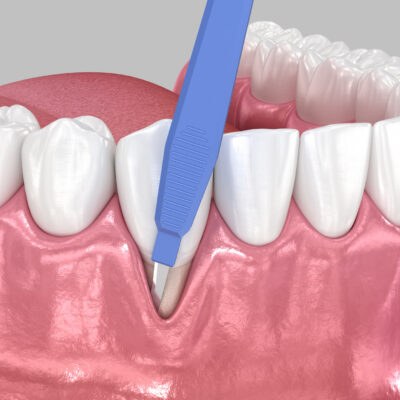
Soft tissue grafting builds up thin or receded gum tissue before implant placement, creating a stronger, healthier seal around the implant that protects the underlying bone and supports long-term stability. For patients with thin gums, a history of gum disease, or visible tissue loss, this step is often what determines whether an implant succeeds for decades or runs into problems within a few years.
What Is Soft Tissue Grafting?
Soft tissue grafting is a procedure that adds gum tissue to areas where it’s thin, receded, or missing. At Precision Periodontal and Implant Center, grafting uses either tissue from your own mouth or a biocompatible graft material, placed to build up the gumline before or during implant treatment. The goal is a thicker, healthier band of tissue that can properly protect and support an implant.
Why Does Gum Health Matter for Dental Implants?
Bone gets most of the attention in implant planning, but the soft tissue surrounding an implant is just as important. Healthy gum tissue:
- Creates a protective seal that helps keep bacteria away from the implant and bone below it
- Reduces the risk of peri-implantitis, an infection around the implant similar to gum disease around natural teeth
- Supports a natural-looking result, especially in areas visible when you smile
- Helps the restoration hold up under normal chewing and daily wear over time
Without adequate tissue, even a well-placed implant can be at higher risk for complications down the road.
Who Typically Needs Soft Tissue Grafting?
Not every implant patient requires grafting, but it’s commonly recommended for those with:
- Thin or receded gums at the planned implant site
- A history of periodontal disease that has affected tissue thickness
- Visible root exposure on nearby natural teeth
- Previous tooth loss that has caused the gum tissue to flatten or shrink
How Does the Procedure Work?
At Precision Periodontal and Implant Center, soft tissue grafting typically follows these steps:
- Evaluation – A detailed exam and imaging assess tissue thickness and quality at the treatment site.
- Graft placement – Tissue is carefully placed to build up the gum where it’s thin or missing.
- Healing – Over several weeks, the graft integrates with existing tissue, creating a stronger, thicker foundation.
- Implant planning or placement – Once healing is complete, the site is ready for implant placement with healthy, supportive tissue in place.
What Are the Benefits of Soft Tissue Grafting?
Beyond supporting implant success, patients often notice:
- Reduced sensitivity in areas where roots were previously exposed
- A more even, proportionate gumline
- Better protection for nearby natural teeth as well as implants
- A more natural, seamless appearance in the final result
Is Soft Tissue Grafting Painful or Difficult to Recover From?
Most patients tolerate the procedure well. Local anesthesia keeps you comfortable during treatment, and recovery typically involves mild soreness for a few days. At Precision Periodontal and Implant Center, we provide clear aftercare instructions so healing stays on track and the graft has the best chance to integrate successfully.
How Do I Know If I Need Gum Grafting Before My Implant?
The only reliable way to know is a thorough evaluation. At Precision Periodontal and Implant Center, every implant plan starts with an assessment of both bone and soft tissue, so nothing is left to guess. If grafting is recommended, we’ll explain exactly why and how it fits into your overall timeline.
Take the Next Step
If you’re planning for dental implants and want to know whether soft tissue grafting should be part of your treatment, the best step is a consultation. Call 310-708-3938 today to schedule an appointment at Precision Periodontal and Implant Center and build a strong foundation for your new smile.