
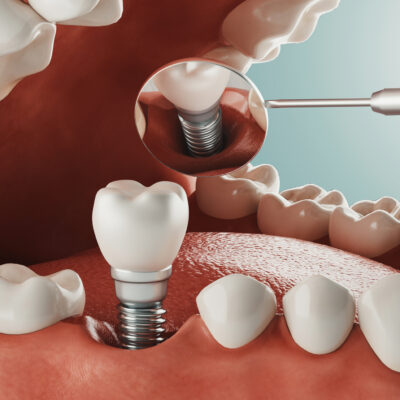
A missing back tooth may not show when you smile, but it can quietly change the way your whole mouth works. Molars handle most of your chewing force, and when one is lost, nearby teeth begin to shift, your bite can change, and the jawbone in that area starts to shrink. A dental implant is the most effective way to replace a missing molar because it restores full chewing strength and supports the bone underneath. At Precision Periodontal and Implant Center, we help Hawthorne patients replace back teeth with implants designed to handle everyday chewing for years to come.
Why Do Back Teeth Matter So Much?
Your molars are built for heavy work. They grind and crush food so you can chew comfortably and digest properly. They also act like pillars that hold your bite at the right height and keep your front teeth from taking on too much pressure.
When a molar is missing, patients often notice:
- Chewing only on one side of the mouth
- Difficulty eating meats, raw vegetables, or crunchy foods
- Food getting trapped in the gap
- More wear or sensitivity on the remaining teeth
What Happens If a Missing Molar Isn’t Replaced?
Leaving a gap in the back of the mouth often leads to a chain reaction over time:
- Neighboring teeth tilt into the open space, creating hard-to-clean areas
- The opposing tooth drifts up or down toward the gap, changing your bite
- Bone loss begins because the jaw no longer receives chewing stimulation
- Bite problems develop, which can contribute to jaw discomfort or uneven wear
The longer a gap goes untreated, the more complex it can become to restore. Replacing a molar sooner usually means a simpler, more predictable treatment.
Why Is an Implant the Best Choice for a Missing Molar?
A dental implant replaces both the root and the crown of the missing tooth. Because it is anchored in the jawbone, it can handle strong chewing forces much like a natural molar.
Compared with other options, implants offer clear advantages:
- Full chewing strength without slipping or shifting
- No need to grind down healthy neighboring teeth for a bridge
- Bone preservation, since the implant stimulates the jaw
- A stable bite that keeps surrounding teeth in position
- Long-term durability with proper care
Are There Special Considerations for Upper Molars?
Upper back teeth sit just below the sinuses. After a molar is lost, the bone in this area can thin and the sinus may expand downward, leaving less room for an implant. In these cases, a sinus lift procedure can add bone height so the implant has a secure foundation.
Lower molars can also lose bone width over time. When needed, advanced bone grafting rebuilds the area so the implant can be placed in the ideal position.
What Does the Treatment Process Look Like?
Replacing a molar with an implant typically involves:
- A detailed evaluation with 3D imaging to measure bone and plan placement
- Bone or sinus grafting if additional support is needed
- Implant placement using precise, minimally invasive techniques
- A healing period while the implant fuses with the jawbone
- A custom crown designed to match your bite and chewing needs
In some cases, an implant can be placed at the same visit a damaged molar is removed, which can shorten the overall timeline.
Restore Your Chewing Comfort
You should not have to avoid your favorite foods or chew on one side of your mouth. Replacing a missing molar protects your bite, your remaining teeth, and the health of your jawbone.
Schedule Your Implant Consultation Near Hawthorne
If you are missing a back tooth or have a molar that needs to be removed, the team at Precision Periodontal and Implant Center can help you understand your options. Call 310-708-3938 today to schedule your consultation and take the first step toward a stronger, healthier bite.