
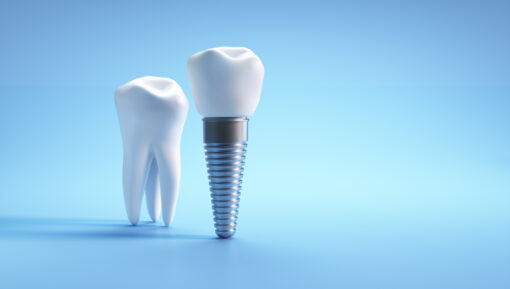
If you’re facing the loss of most or all of your teeth in one arch, one of the first practical questions is usually the simplest one: how many implants will it actually take? The answer isn’t the same for every patient, and understanding the factors involved can help you feel more prepared going into a consultation.
There’s No Single “Right” Number
It might seem logical that replacing a full arch of teeth would require an implant for every missing tooth, but that’s not how full-arch implant treatment typically works. Instead, a smaller number of strategically placed implants support an entire arch of replacement teeth. The exact number depends on your bone structure, oral health, and treatment goals.
Common Full-Arch Implant Configurations
At Precision Periodontal and Implant Center, the number of implants recommended usually falls into a few general categories:
- All-on-4 – As few as four implants, angled precisely to maximize support even in areas with less bone. This is often the most conservative option and works well for many patients.
- All-on-6 – Six implants distributed across the arch, which can offer additional support and may be recommended based on bite forces, bone quality, or the specific restoration planned.
- Individual implant-supported bridges – In some cases, multiple smaller bridges supported by more implants may be used instead of one continuous full-arch restoration.
None of these options is universally “better.” The right choice depends on your specific anatomy and what will provide the most stable, long-lasting result for you.
What Determines the Number of Implants
Several factors go into this decision, including:
- Bone density and volume – Areas with more available bone may need fewer implants, while thinner bone may call for additional support or grafting.
- Bite force and jaw relationship – How your upper and lower arches meet affects how much support the restoration needs to function properly over time.
- The type of restoration planned – A fixed, permanent bridge and a removable implant-supported denture can have different implant requirements.
- Long-term stability goals – More implants can sometimes offer added redundancy, which some patients and clinicians prefer for peace of mind.
Why More Isn’t Always Better
It’s a common assumption that more implants automatically means a stronger result, but that’s not always true. All-on-4’s angled placement technique was specifically designed to maximize stability with fewer implants, often reducing the need for extensive bone grafting and shortening treatment time. For many patients, four well-placed implants provide excellent long-term function.
That said, some cases genuinely call for more support, which is why a personalized evaluation matters more than a one-size-fits-all number.
How the Decision Gets Made
At Precision Periodontal and Implant Center, determining the right number of implants starts with a thorough evaluation, including:
-
- 3D imaging to assess bone density and structure throughout the arch
- A review of your bite and jaw alignment
- A discussion of your goals, whether that’s minimizing treatment time, maximizing stability, or both
- A clear explanation of the reasoning behind the recommended treatment plan
Take the Next Step
If you’re exploring full-arch implant options and want to understand what your specific case requires, the best next step is a consultation. Call 310-708-3938 today to schedule an appointment at Precision Periodontal and Implant Center and get a personalized answer to how many implants are right for you.