
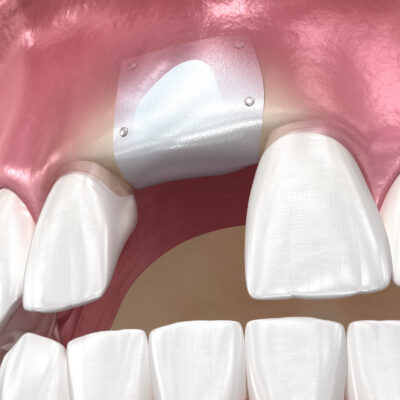
When Manhattan Beach patients begin researching dental implants, the conversation tends to focus on bone density, implant placement, and the final restoration. Soft tissue — the gum surrounding the implant — often gets overlooked. But for periodontists who specialize in both gum health and implant therapy, the quality of that tissue is never an afterthought. At Precision Periodontal and Implant Center, gum grafting is one of the most important tools we use to protect implants and ensure they remain healthy, stable, and natural-looking for the long term.
Why Soft Tissue Is Part of the Implant Equation
A dental implant may be anchored in bone, but the gum tissue around it serves as its first line of defense. Healthy, thick gum tissue creates a seal that protects the implant from bacteria, resists recession, and contributes to the overall aesthetic of the restoration.
When that tissue is thin, insufficient, or compromised, the implant is more exposed — both biologically and visibly. Thin gum tissue around an implant is more likely to recede over time, which can expose the implant post, create sensitivity, and invite the kind of bacterial infiltration that leads to peri-implantitis. For Manhattan Beach patients investing in long-term implant therapy, protecting that tissue from the start is simply good planning.
What Gum Grafting Involves
A gum graft is a procedure in which healthy tissue is transplanted to an area where the gums are thin, absent, or receding. The tissue is typically taken from the patient’s palate or sourced from a tissue bank, then carefully placed and secured at the target site.
In the context of implant therapy, grafting may be performed:
- Before implant placement, to build up tissue at a site that lacks adequate volume or keratinized gum tissue
- At the time of placement, to immediately establish the soft tissue environment around the implant
- After placement, if recession develops around an existing implant that needs additional tissue support
The timing depends on each patient’s unique anatomy and the specific demands of their treatment plan. At Precision Periodontal and Implant Center, this evaluation is part of every implant consultation.
The Long-Term Consequences of Skipping This Step
Some patients receive implants without any assessment of soft tissue quality — and for a period of time, everything may look and feel fine. But thin or inadequate tissue around an implant tends to become a problem eventually. Recession develops. The implant post becomes visible. Sensitivity increases. In more serious cases, infection takes hold and threatens the implant itself.
Addressing soft tissue proactively is significantly less complex than managing recession or peri-implantitis after the fact. For patients who want their implants to last decades — not just years — building a strong gum foundation is part of the investment.
Gum Grafting as a Standalone Recession Treatment
It’s worth noting that gum grafting isn’t only relevant to implant patients. Manhattan Beach patients experiencing gum recession around natural teeth can also benefit significantly from grafting procedures. Covering exposed roots reduces sensitivity, stops recession from progressing, and restores the protective barrier that keeps teeth healthy. In many cases, treating recession with grafting is also what makes a patient a stronger candidate for implants later on.
A Complete Approach to Implant Therapy
At Precision Periodontal and Implant Center, we don’t separate implant care from periodontal care — because they’re part of the same picture. Every implant patient receives a thorough evaluation of bone health, gum tissue quality, and overall oral health before a treatment plan is designed. When grafting is part of that plan, we explain exactly why, what the procedure involves, and how it supports the long-term success of your implants.
If you’re considering dental implants in Manhattan Beach and want to understand the full scope of what great implant therapy looks like, call 310-708-3938 today to schedule your consultation at Precision Periodontal and Implant Center.