
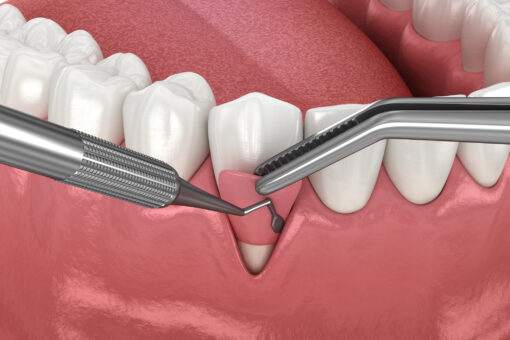
When patients think about what a dental implant needs to succeed, bone usually comes to mind first. But bone isn’t the only foundation that matters. The gum tissue surrounding an implant plays a critical role in protecting it, supporting its appearance, and keeping it stable for years to come. For some patients, that means gum grafting is a necessary step before implant placement — not an optional add-on.
Why Gum Tissue Matters for Implants
Healthy gum tissue does more than frame your smile. Around an implant, it acts as a seal that helps protect the underlying bone from bacteria and infection. Thin, weak, or receded gum tissue can leave an implant vulnerable in ways that aren’t always obvious right away.
Without adequate gum coverage, patients may experience:
- Increased risk of peri-implantitis, an infection around the implant similar to gum disease
- Visible metal or a grayish look at the gumline as tissue thins over time
- Reduced long-term stability if the tissue can’t properly support the restoration
- A less natural appearance, especially in areas visible when you smile
Signs You Might Need Gum Grafting First
Not every implant patient needs grafting, but certain situations make it more likely. You may benefit from gum grafting before implant placement if you have:
- Thin or receded gum tissue at the implant site
- A history of periodontal disease that has affected gum thickness
- Visible root exposure on nearby natural teeth
- An area where previous tooth loss has caused tissue to shrink or flatten
How Gum Grafting Works
At Precision Periodontal and Implant Center, gum grafting is a straightforward, well-established procedure. Depending on your needs, treatment may involve:
- Evaluation – A thorough exam and imaging to assess tissue thickness and quality at the planned implant site.
- Graft placement – Tissue, either your own or a biocompatible graft material, is placed to build up the gum where it’s thin or missing.
- Healing period – The graft integrates with your existing tissue over several weeks, creating a thicker, healthier band of gum.
- Implant placement – Once healing is complete, the site is ready for implant placement with a stronger soft tissue foundation.
In some cases, grafting and implant placement can be coordinated more closely together, depending on the specifics of your case.
Benefits Beyond Just Implant Support
Gum grafting isn’t only about protecting an implant. Patients often notice additional benefits, including:
- Reduced sensitivity in areas where roots were previously exposed
- A more even, proportionate gumline
- Improved long-term stability for both implants and natural teeth nearby
- A more natural, seamless look once the final restoration is placed
What to Expect at Your Evaluation
At Precision Periodontal and Implant Center, every implant plan starts with a careful look at both bone and soft tissue. If gum grafting is recommended, we’ll explain exactly why, walk you through the timeline, and make sure you understand how it fits into your overall treatment plan. Our goal is a stable, healthy foundation the first time, not treatment that needs to be redone later.
Take the Next Step
If you’re considering dental implants and want to know whether gum grafting should be part of your plan, the best way to find out is a consultation. Call 310-708-3938 today to schedule an appointment at Precision Periodontal and Implant Center and get a clear picture of what your smile needs to succeed.