
For patients missing multiple or all teeth, traditional dentures have long been a common solution. While dentures can restore appearance, many patients struggle with slipping, discomfort, and difficulty eating certain foods.
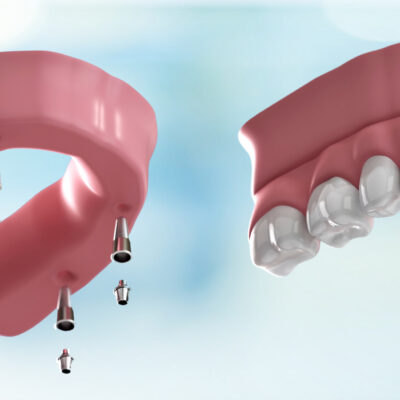
Implant overdentures offer a modern alternative. By anchoring a removable prosthetic to dental implants, this option provides significantly improved stability while maintaining the flexibility of a removable design.
Understanding the differences helps patients choose a solution that supports both comfort and long-term oral health.
How Traditional Dentures Work
Traditional full dentures rest directly on the gums and rely on suction or adhesive for stability. While they can restore the look of a smile, they do not replace tooth roots beneath the surface.
Over time, this can lead to:
- Gradual bone loss in the jaw
- Changes in facial structure
- Reduced denture fit
- Increased reliance on adhesives
As the jawbone shrinks, dentures may require adjustments or replacement to maintain proper fit.
What Are Implant Overdentures?
Implant overdentures are removable dentures that attach securely to dental implants placed in the jawbone. The implants act as artificial tooth roots, providing stability and stimulating the bone beneath.
Typically, two to four implants are used per arch to anchor the denture. The prosthetic then snaps or clips into place, reducing movement during eating and speaking.
Key Advantages of Implant Overdentures
Compared to traditional dentures, implant overdentures provide several important benefits:
- Improved stability with minimal shifting
- Greater chewing efficiency
- Reduced need for adhesives
- Enhanced comfort
- Preservation of jawbone structure
Because the implants stimulate the bone, they help slow or prevent the bone loss that naturally occurs after tooth loss.
Long-Term Health Considerations
Bone preservation is one of the most significant advantages of implant-supported solutions. When teeth are missing, the jawbone no longer receives stimulation from natural tooth roots. Over time, this can cause shrinkage and changes in facial appearance.
Implant overdentures help:
- Maintain bone volume
- Support facial structure
- Reduce long-term changes in fit
- Improve overall oral stability
By protecting the foundation of the smile, implant overdentures support both function and aesthetics.
Who Is a Candidate?
Many patients who are currently wearing traditional dentures are candidates for implant overdentures. Eligibility depends on:
- Overall health
- Bone quality and volume
- Gum health
- Commitment to ongoing maintenance
At Precision Periodontal and Implant Center, a comprehensive evaluation—including advanced imaging—helps determine whether implant overdentures are the right solution.
A Balanced Approach to Restoration
Implant overdentures offer a middle ground between traditional removable dentures and fixed full-arch implant restorations. Patients gain stability and bone preservation benefits while maintaining the ability to remove the prosthetic for cleaning.
For many individuals, this balance provides both comfort and confidence.
If you are frustrated with loose dentures or want to explore a more stable alternative, contact Precision Periodontal and Implant Center at 310-708-3938 to schedule a consultation. A personalized treatment plan can help you regain function, protect your jawbone, and restore confidence in your smile.