
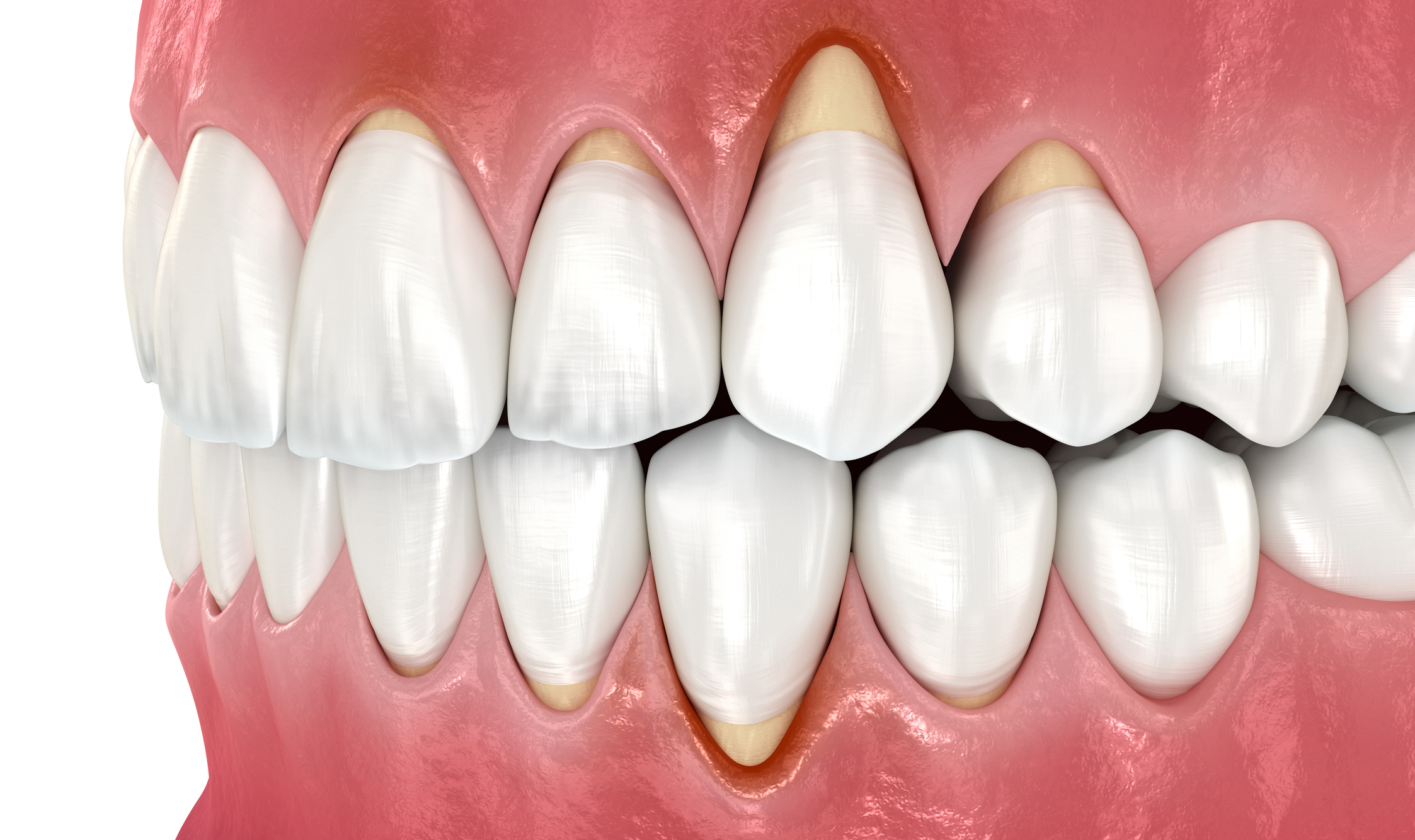
When patients notice gum recession, their first concern is often whether surgery is inevitable. While gum grafting is a highly effective treatment, it isn’t always the first—or only—option. The right approach depends on the cause, severity, and progression of the recession. At Precision Periodontal and Implant Center, determining whether you need a gum graft or a less invasive treatment begins with a careful evaluation of your gum and bone health.
Understanding Why Gum Recession Happens
Gum recession occurs when gum tissue pulls away from the teeth, exposing the root surface. This can happen for several reasons, including:
- Periodontal disease
- Aggressive brushing habits
- Thin or fragile gum tissue
- Tooth misalignment
- Grinding or clenching
- Genetics
Not all recession behaves the same way. Some cases progress quickly, while others remain stable for years. Understanding why the recession is happening is the first step in deciding how to treat it.
When Monitoring or Lifestyle Changes May Be Enough
In mild cases, gum recession may not require immediate surgical treatment. If the gums are stable and there is no ongoing inflammation, your periodontist may recommend monitoring the area instead. Treatment at this stage often focuses on preventing further damage.
This may include:
- Adjusting brushing technique
- Switching to a softer toothbrush
- Treating clenching or grinding with a nightguard
- Improving plaque control
- Scheduling more frequent cleanings
If recession is not worsening and sensitivity is minimal, these steps may be enough to protect the area.
When Less Invasive Procedures Are an Option
For patients with moderate recession and healthy surrounding tissue, minimally invasive techniques may be recommended. One example is the pinhole surgical technique, which repositions existing gum tissue without the need for sutures or donor tissue.
Less invasive treatments may be appropriate when:
- Recession is localized
- Gum tissue quality is adequate
- Bone support is stable
- Cosmetic improvement is desired with minimal downtime
These options often involve shorter recovery times and excellent aesthetic outcomes.
When Gum Grafting Is the Best Solution
Gum grafting is typically recommended when recession threatens the long-term health of the tooth. This may be the case if:
- Tooth roots are exposed and sensitive
- Recession continues to progress
- Bone loss is present
- Gums are too thin to protect the tooth
- The risk of root decay is high
A gum graft adds thickness and coverage to vulnerable areas, creating a stronger protective barrier. While it is a surgical procedure, most patients find recovery manageable and are pleased with the long-term results.
Why Professional Evaluation Matters
It’s impossible to determine the right treatment based on appearance alone. What looks like minor recession may be masking deeper bone loss or inflammation. At Precision Periodontal and Implant Center, we use periodontal measurements and imaging to evaluate both gum tissue and the bone beneath it. This allows us to recommend treatment that protects your teeth—not just improves appearance.
Choosing the Right Approach for Long-Term Health
The goal of treating gum recession isn’t just cosmetic—it’s about preserving the teeth and bone that support your smile. Whether treatment involves monitoring, a minimally invasive procedure, or gum grafting, the right plan is one tailored to your specific needs.
If you’re concerned about gum recession or unsure which treatment is appropriate, call 310-708-3938 to schedule an evaluation at Precision Periodontal and Implant Center. Early guidance can make the difference between simple prevention and more extensive treatment later.